A Definition of geofinance
A tentative definition and open questions
Tentative Definition of Geofinance
Geofinance is a field of study and practice describing the interconnection between geopolitics and the financial system, a term prominently developed by André Lévy-Lang and Julien Pincet. This relationship is bidirectional: the existing financial system shapes the range and scale of possible geopolitical decisions, while geopolitical decisions influence the way financial institutions provide services like payment systems, financing, and insurance.
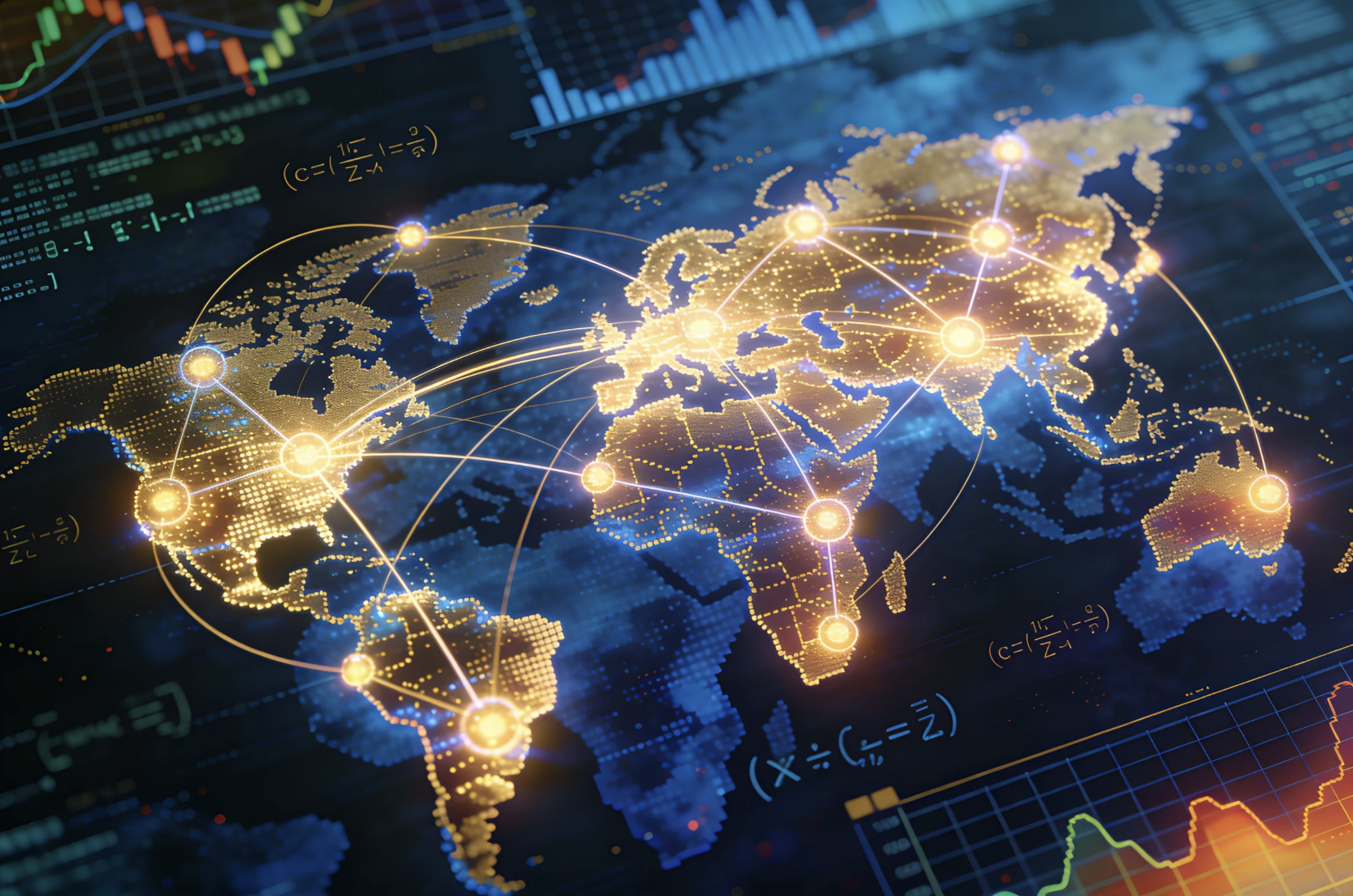
The Financial Infrastructure as a Geopolitical Instrument
The financial system has evolved into an interface between imperium (the political domain) and dominium (the economic domain).
- Weaponization of Infrastructure: Infrastructure such as the SWIFT messaging network has been instrumented as a weapon for sanctions, notably in the exclusion of Iranian and Russian banks.
- Counter-Alliances: In response to the persistent structural dominance of the U.S. dollar, countries are forming alliances to develop competing cross-border systems, such as China’s CIPS and Russia’s SPFS, to mitigate dollar reliance and sanction risks.
- Broad Regulatory Scope: The geofinancial infrastructure extends beyond payments to include macro-prudential policies, the implementation of Basel III, and the strengthening of European markets through regulations like MiCA. These frameworks allow major economic blocs to position themselves as “regulatory trend-setters” to shape global standards through market influence.
The Global Supply Chain: The Core Medium
The global supply chain serves as the primary medium linking financial institutions to geopolitical shifts.
- Systematic Problematic: Modeling the supply chain is critical to understanding the transition from a multilateral to a multipolarized economic system.
- Complex Modeling: Models must identify links between companies, countries, and raw material availability—such as the “Hormuz Imperative” where 50% of China’s crude imports pass through a single chokepoint, making regional stability a domestic economic necessity for Beijing.
- Multi-Scale Integration: Effective models must be multi-scale to incorporate updates at sectorial, company, and brand levels. This requires integrating heterogeneous data, including maritime traffic, corporate balance sheets, and regulatory filings.
Quantitative Indicators for Geofinance
A primary research direction in geofinance is structuring a graph of dependencies that links the real economy with tradable financial instruments.
- Mixed-Frequency Information: These graphs must accommodate data at multiple frequencies—ranging from daily news and financial flows to quarterly reports—using advanced econometric techniques like MIDAS (Mixed Data Sampling) or a Bayesian framework to avoid losing information through temporal aggregation.
- Shock Propagation: Such models allow for “what-if” scenarios, estimating how a shock (e.g., a ban on a specific raw material) propagates across the network of suppliers and clients. They account for substitution effects where, after a certain threshold of exposure, only a subset of the network may find alternative sources.
Geofinance and Portfolio Construction
The realization of geofinancial risks requires a rethinking of diversification, which can no longer be defined simply as “no historical correlation”.
- Non-IID Shocks: Unlike traditional risk factors, geopolitical shocks are often rare, high-impact, and path-dependent events that represent a “tipping point” followed by a cascade of correlated consequences.
- Liquidity and Factors: Most geopolitical risks currently lack liquidity and inherent tradability, meaning they are not easily captured by standard linear factor models. Portfolio construction must therefore incorporate supply chain linkages to identify assets that truly hedge the vulnerabilities of others.
Geofinancial Risk vs. Physical Risk
While geofinancial and physical risks (such as climate disruption) share commonalities, they possess distinct propagation characteristics.
- Physical Risk Stability: Environmental risks, such as extreme weather or biodiversity loss, are immediate systemic vulnerabilities often ignored by flawed economic models.
- Interconnection: Geofinancial risks are often more volatile and driven by political will. However, the two categories are increasingly intertwined; for instance, the intersection of climate disruptions and cyberattacks creates vulnerabilities that traditional risk management frameworks struggle to capture.
Further readings
- Geoeconomic Confrontation is now the highest ranked risk, according to The 2026 WEF Global Risks Report
- Lévy-Lang, André, and Julien Pincet. “La géofinance, interactions entre géopolitique et finance : une perspective historique” Revue d’économie financière, no. 160 (2024). Special issue, “Mutations géopolitiques, fragmentations économiques et financières 1. L’ère des ruptures.”
- Lévy-Lang, André, and Julien Pincet. Geofinance, the Interweaving of Finance and Geopolitics. Opinions et Débats, no. 31. Paris: Institut Louis Bachelier, September 2024.